In the first century CE, a merchant in Gaul could use Roman coinage, appeal to Roman law, and worship both local and imperial gods. The structures of Rome had reached far beyond the city itself. Empire meant more than conquest.
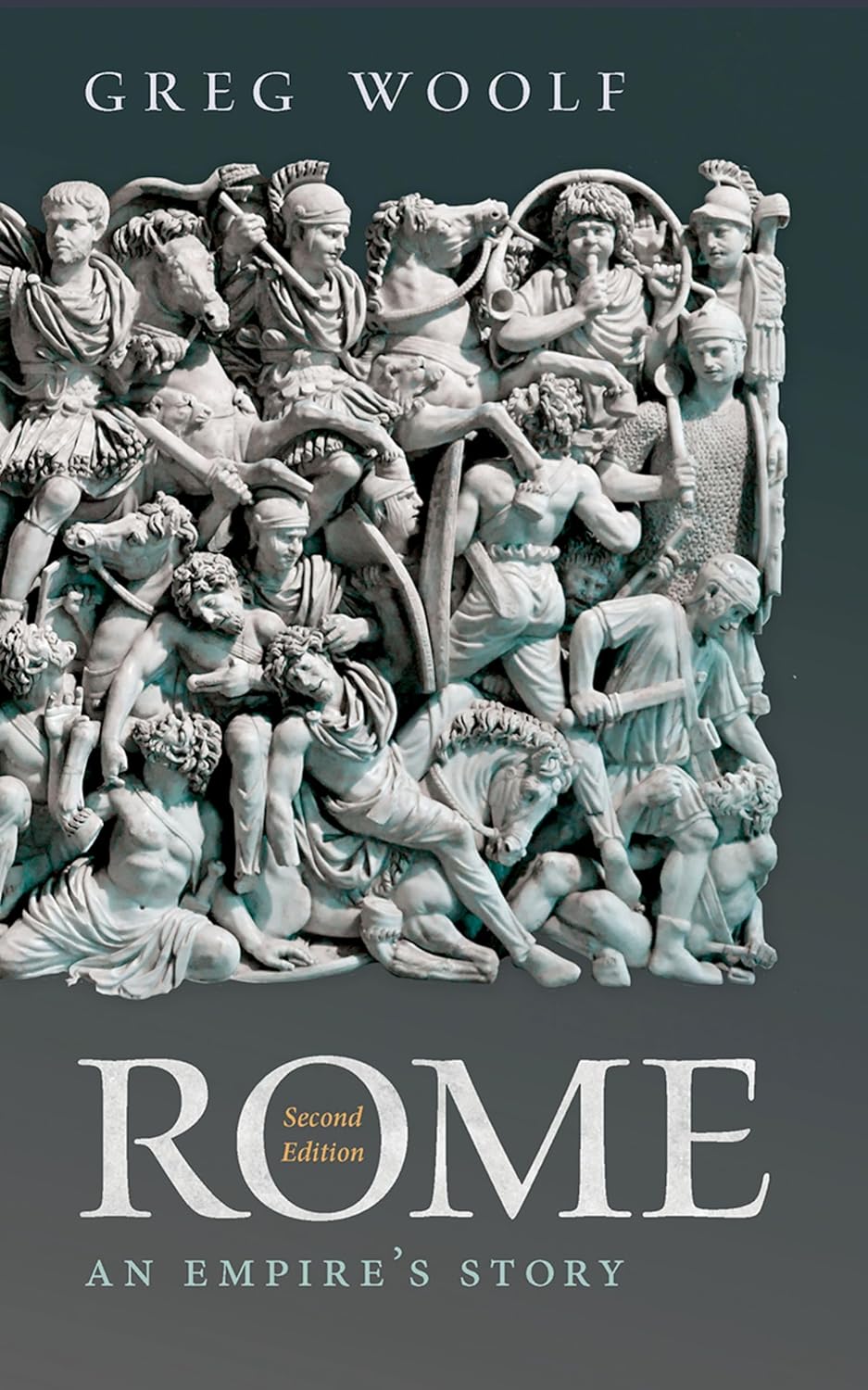
In Rome: An Empire’s Story, Greg Woolf explores how that expansion unfolded and how it was sustained. Rather than presenting Rome as a sequence of emperors and battles, he concentrates on the mechanisms that turned a city-state into a durable imperial system. The book sits within modern scholarship that treats Rome as a connected Mediterranean power.
What the Book Covers
Woolf spans Rome’s history from its early growth in central Italy through the height of imperial power and into late antiquity. He is primarily interested in how expansion was organised and how diverse regions were incorporated. The narrative links military conquest to administration, economy, and cultural exchange.
He examines:
- The consolidation of Roman power in Italy during the Republic
- The Punic Wars and overseas expansion
- The transformation from Republic to Principate under Augustus
- Provincial administration and taxation across the empire
- The spread of Roman law, citizenship, and urban institutions
- The challenges of governing a multi-ethnic Mediterranean realm
The emphasis is on the structures that allowed Rome to manage scale and diversity over time.
What makes it different
Woolf writes with close attention to archaeology as well as literary sources. He treats the empire as a network of regions rather than a story centred only on Rome itself. His interpretation highlights integration and adaptation rather than simple domination.
Strengths
- Clear explanation of how provincial systems functioned in practice.
- Effective integration of archaeological evidence with political narrative.
- Balanced attention to economic, administrative, and cultural factors.
- Consistent focus on long-term development rather than isolated crises.
Limitations
- The wide chronological range limits detailed treatment of specific reigns.
- Military campaigns receive less narrative emphasis than structural analysis.
- Readers seeking a biography-driven account may find the approach thematic.
Who should read it
- Readers interested in how Rome governed a vast empire.
- Students seeking a broad survey grounded in recent scholarship.
- Those curious about provincial life beyond the city of Rome.
- General readers wanting a structural account of Roman expansion.
Final assessment
Rome: An Empire’s Story presents the Roman Empire as a system built through expansion, adaptation, and administration. Greg Woolf situates conquest within longer patterns of integration and governance. The book stands as a clear, modern survey of Rome’s imperial development.