In 1821, rebels in the Peloponnese declared independence from Ottoman rule while invoking ancient Sparta and Byzantium in the same breath. Their language drew on centuries of layered memory. The idea of “the Greeks” already carried multiple histories.
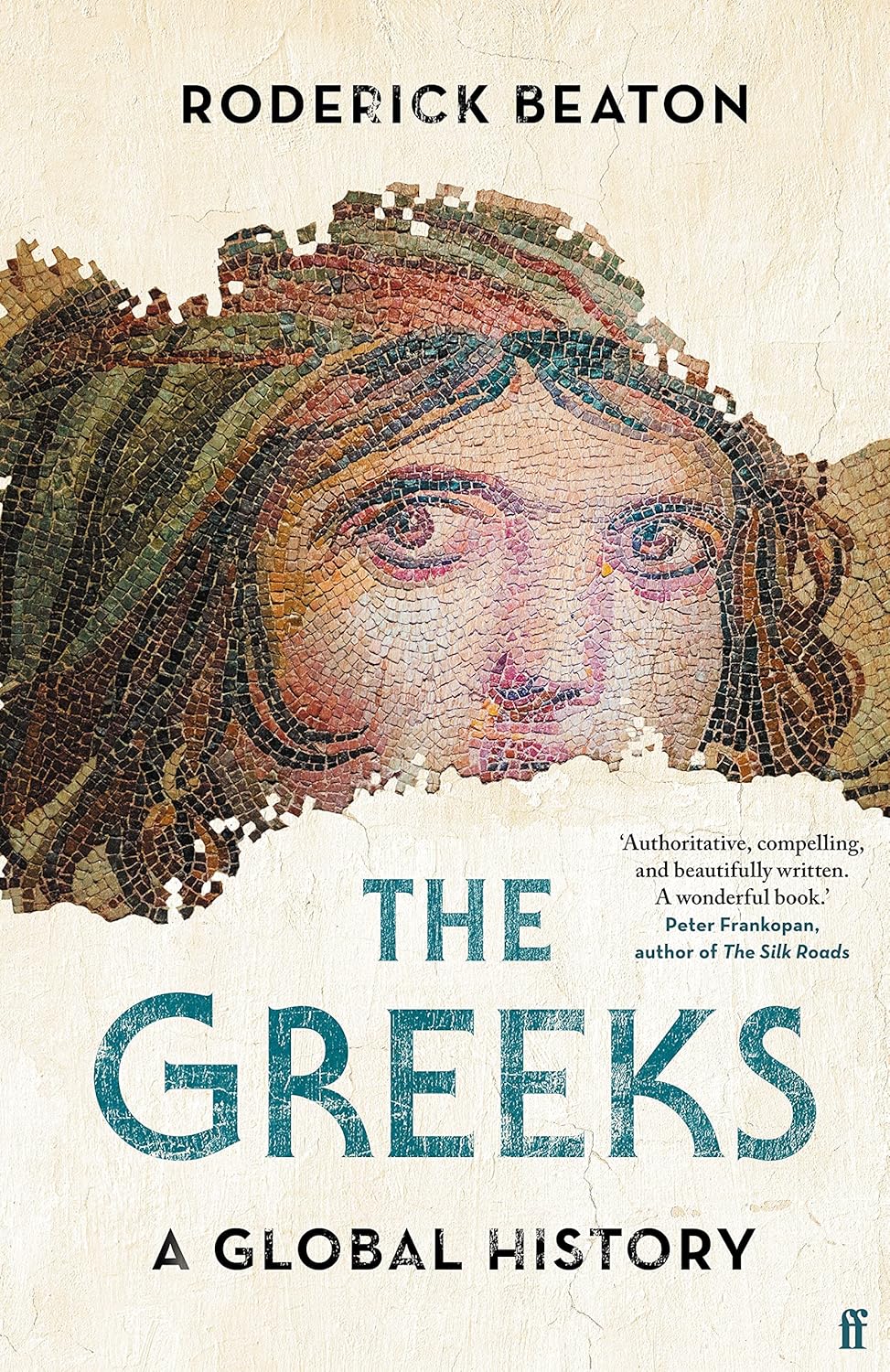
In The Greeks: A Global History, Roderick Beaton sets out to explain how that continuity was constructed and sustained. Rather than isolating classical Athens or Alexander’s empire, he treats Greek history as a long, evolving narrative that extends into the modern diaspora.
What the Book Covers
Beaton spans more than three millennia, from Mycenaean settlements to contemporary Greece and its global communities. He is primarily interested in how Greek identity persisted despite political fragmentation and foreign rule. The book moves across regions and centuries while maintaining a focus on cultural continuity.
He examines:
- The Mycenaean world and the legacy of Homeric epic
- The classical city-states of Athens and Sparta
- Alexander the Great and the spread of Hellenistic culture
- Byzantine Christianity and its Greek linguistic foundations
- Greek communities under Ottoman rule
- The War of Independence and the formation of the modern Greek state
The thread connecting these episodes is the endurance of language, education, and shared cultural reference across changing political contexts.
What makes it different
Beaton writes as a historian of modern Greece who is attentive to antiquity. He treats Hellenism as a continuous cultural tradition rather than a series of disconnected eras. His method combines political history with literary and linguistic evidence to show how Greeks understood their own past.
Strengths
- Wide chronological range handled with clear structure and pacing.
- Strong integration of ancient, medieval, and modern periods within one narrative.
- Careful attention to language as a marker of continuity.
- Balanced treatment of empire, occupation, and national formation.
Limitations
- The breadth of coverage limits detailed exploration of specific periods.
- Social and economic history sometimes recedes behind cultural narrative.
- Readers seeking deep engagement with classical scholarship may find the emphasis broader than specialised.
Who should read it
- Readers interested in Greek history beyond the classical period.
- Those curious about the relationship between antiquity and modern nationalism.
- Students seeking a long-view account of cultural continuity.
- General readers interested in how identities endure across empires.
Final assessment
The Greeks: A Global History presents Greek identity as a long and evolving tradition shaped by empire, religion, and migration. Roderick Beaton connects classical, Byzantine, and modern history within a single framework. The book stands as a broad, integrated account of Greek continuity across time and geography.