In 533, a fleet sailed from Constantinople toward North Africa under the command of Belisarius. Its objective was the Vandal kingdom, once Roman territory. Within a year, the province had returned to imperial rule.
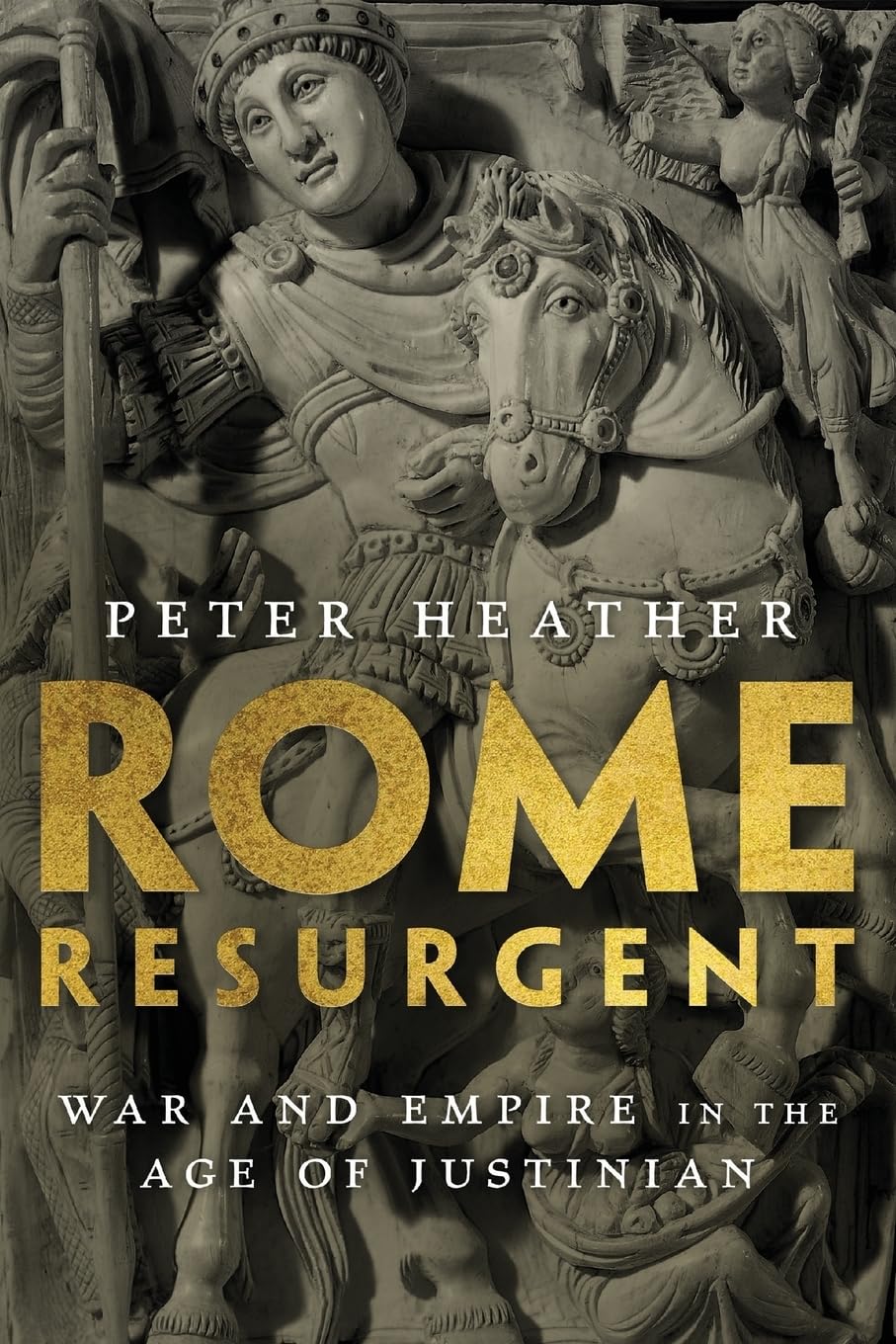
In Rome Resurgent, Peter Heather analyses how and why such campaigns were launched. He places Justinian’s reconquests within the broader military and political context of the sixth century. The book stands as a focused study of imperial strategy during a period often described simply as decline.
What the Book Covers
Heather concentrates on the reign of Justinian (527–565 CE) and the decades surrounding it. He is primarily concerned with military planning, state resources, and geopolitical calculation. The narrative links eastern security concerns with western expansion.
He examines:
- The Nika Revolt and the consolidation of Justinian’s authority
- The reconquest of North Africa from the Vandals
- The long war against the Ostrogoths in Italy
- The renewed conflict with the Persian Empire on the eastern frontier
- The financial and administrative structures that supported sustained warfare
- The balance between territorial recovery and strategic overstretch
The book argues that Justinian’s wars were shaped by long-term imperial interests rather than sudden opportunism.
What makes it different
Heather approaches Justinian’s reign through the lens of strategic history. He integrates military campaigns with fiscal capacity and diplomatic calculation, drawing on both literary and archaeological evidence. His interpretation challenges the view that the western reconquests were inherently misguided.
Strengths
- Clear explanation of how military logistics and finance supported prolonged campaigns.
- Balanced treatment of eastern and western fronts within a single strategic framework.
- Detailed analysis of Belisarius and other commanders without reducing events to biography.
- Careful reassessment of the costs and outcomes of the Italian wars.
Limitations
- Cultural and religious dimensions of Justinian’s reign receive less attention.
- Readers seeking narrative drama may find the strategic focus more analytical than dramatic.
- The economic data can be dense in sections dealing with fiscal capacity.
Who should read it
- Readers interested in Late Roman and early Byzantine military history.
- Those examining the transformation of the Roman Empire in the sixth century.
- Students of imperial strategy and state finance.
- General readers looking for a focused account of Justinian’s wars.
Final assessment
Rome Resurgent presents Justinian’s campaigns as calculated efforts to preserve and strengthen imperial power. Peter Heather situates these wars within the structural realities of sixth-century geopolitics. The book contributes a clear strategic perspective to the study of the later Roman Empire.